Air Conditioner Peptide Screening Laboratories Third-party Peptide Analysis
Peptide Pureness & Quantitation Testing
The dissolved peptide sample is injected right into a stream of liquid solvent (the mobile phase) that streams through a tube packed with tiny bits (the stationary stage). Different particles "stick" to those particles with various strengths, so they take a trip via the column at different speeds. Refined distinctions in basic material pureness and framework can result in disparities in the activity of the final product.These modifications transform the peptide's biological activity and chromatographic account. Peptides are sensitive to temperature level, light, and chemical environments, making them susceptible to deterioration, which influences efficacy. BOC Sciences provides increased security, light security, and chemical degradation experiments to methodically analyze formula security dangers.
One of the most stringent quality, including careful HPLC purification-- sometimes numerous rounds-- and strenuous QC. Required for measurable research studies, Laboratory Research architectural biology, in vivo research study versions, and any type of application where also small amounts of contamination might affect outcomes. This is the quality where the cost increases most sharply, due to the fact that attaining that last 1-- 3% of pureness requires disposing of a significant portion of the synthesized material. A removal peptide missing out on a single residue could still bind to the very same receptor, yet with different affinity or selectivity. In concentration-response experiments, these contaminants can change contours, squash plateaus, or introduce biphasic actions that obscures real task of the target compound. The isoelectric point (masterpiece) is a critical criterion for understanding peptide solubility and actions in numerous settings.
- High pureness is desirable since also tiny impurities may hinder speculative outcomes or interpretations.
- Additionally, recurring independent testing sustains conformity in batch release and quality control.
- Our solution sustains artificial, modified, cyclic, conjugated, and difficult peptide samples with logical process built around the real task question as opposed to a taken care of default panel.
- Constant injection volume issues because straining the column can widen peaks, misshape pureness estimates, or conceal nearby pollutants.
- " It does not, on its own, show that the primary top is the intended peptide.
- Each peptide is carefully checked throughout the analytical cycle according to rigorous analytical quality control and biosynthetic quality assurance requirements.
Peptide High Quality Screening System From Boc Sciences
These are valuable in the right setup, however they should be taken method-specific evidence rather than an universal substitute for HPLC and MS. But peptide purity is perhaps the single most important quality statistics for any type of research peptide. It directly influences the reliability and reproducibility of experimental outcomes. A peptide noted at 75% purity and one at 99% purity aren't simply different grades-- they can create meaningfully various end results in the exact same assay.Not Enough In Vivo/in Vitro Security Data
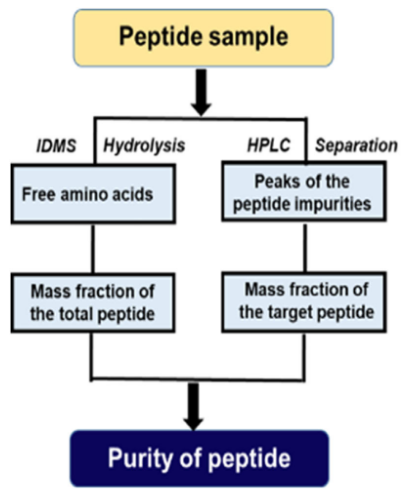
BOC Sciences offers multi-batch contrast evaluation to help customers develop resources quality requirements and make certain consistency. Residual non-peptide elements can change assay analysis, misshape peptide content computations, and make complex great deal credentials. We sustain targeted analysis of pertinent residuals based upon the project and sample background.
While peptide purity isn't the only element, utilizing improperly identified reagents is a recognized factor to irreproducible outcomes. For a 10-residue peptide with 99.5% coupling performance, you would certainly anticipate concerning 95% of the final product to be the unabridged sequence prior to filtration. For a 30-residue peptide at the very same efficiency, that goes down to roughly 86%. This is why longer peptides are more difficult to produce at high purity and generally set you back even more. Purity is the portion of publications in the delivery that have every page printed properly, in the best order, with no missing out on phases and no extra web pages stuffed in. A 95% purity implies that out of every 100 "books" in your batch, 95 are best copies and 5 have some kind of error. Peptide screening is the collection of logical checks used to examine a peptide sample before it is made use of in a study process. In sensible COA evaluation, the term usually refers to pureness testing, identification screening, and paperwork evaluation. Purity testing asks how much of the discovered example is the main peptide versus relevant pollutants. Identity screening asks whether the gauged mass or sequence-related evidence matches the designated peptide. Documents evaluation asks whether the record is batch-specific, traceable, and described enough to be examined. Peptide testing is the analytical process used to verify that a research peptide is both pure and Peptide Manufacturing properly recognized.
