Quantitative Analysis Of Peptide Purity And Contaminations Recent Posts And Discoveries Springer Nature Web Link
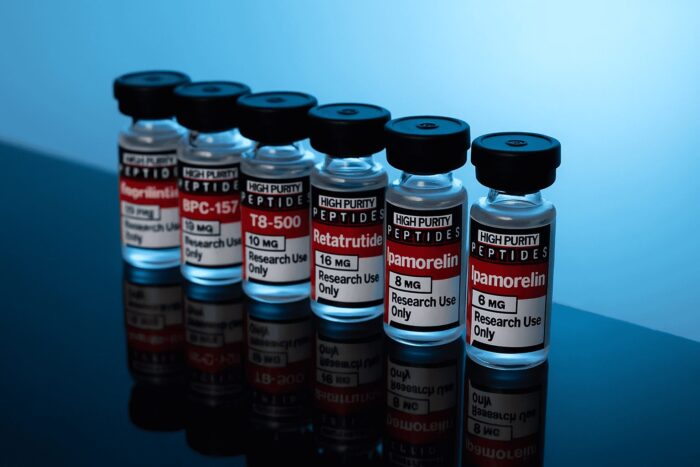
Peptide High Quality: Importance Of Third-party Validation Qing Li Peptide guarantees this through strenuous manufacturing and QC. Contaminations aren't just inactive fillers; they can proactively disrupt your job. Scientists and pharma companies insist on high pureness because contaminations can cause misleading outcomes, mask true biological activity, introduce toxicity, or lower the effectiveness of possible drugs. The effects of utilizing unclean peptides can range from frustrating obstacles to significant safety and security concerns. At Maxed Out Substances, every item we provide includes a clear screening record and clear documents. Our goal is to support scientists with high-purity, confirmed substances that satisfy the needs of modern-day clinical research study-- nothing more, absolutely nothing much less.
- Once reconstituted in option, peptides are a lot more at risk to destruction through oxidation, deamidation, and temperature level changes.
- For lots of purchasers, logical documentation is a secret element of vendor selection.
- Every patient undergoes extensive medical testing before starting peptides, and we monitor development carefully to guarantee effectiveness and safety.
- Accreditation by pertinent bodies (such as ISO/IEC or accreditation for GLP/GMP conformity) is a strong indicator of high quality.
- The peptide market is regrettably raging with counterfeit items that can harm your health or lose your money.
Understanding Peptide Pureness Testing
These contaminations are structurally similar to the target compound and elute near to it on a reverse-phase column, making them challenging to completely eliminate by preparative HPLC. Their biological task is typically lacking or dramatically PharmaGrade.Store peptide blends minimized contrasted to the undamaged sequence, since the missing residues typically add to the energetic conformation or binding pharmacophore. RP-HPLC remains one of the most extensively made use of setting of HPLC for peptide splittings up (1-- 8). It is typically above other HPLC settings in both speed and effectiveness. Palmetto Peptides uses third-party analytical testing for our retatrutide lots. The CoA going along with each order mirrors testing executed by an independent lab. Palmetto Peptides targets ≥ 98% purity for our retatrutide and offers HPLC data with each lot. Variations in composition of the peptide analogs are suggested in vibrant where the amino acid deposits vary from 1a, 2a or 3a. Effect of temperature level on reversed-phase high-performance fluid chromato-graphy of peptides (web fee). Consequently, artificial peptide synthesis holds wonderful possible for pharmaceutical applications. Researchers usually examine purity along with identity confirmation, screening methods, and general documents. HPLC is just one of one of the most commonly made use of methods in peptide purity testing. All items marketed by Palmetto Peptides are intended for study and research laboratory utilize only.What is thought about high pureness?
Gases that have very reduced degrees of contaminations are high-purity gases. They are fine-tuned to be made up practically completely of the desired gas molecules. The degree of purity of these gases is normally above 99.995% and can go beyond 99.99999%. These gases are graded based upon the number of 9s in the pureness degree.